Left Brain or Right Brain: Which Side Drives?
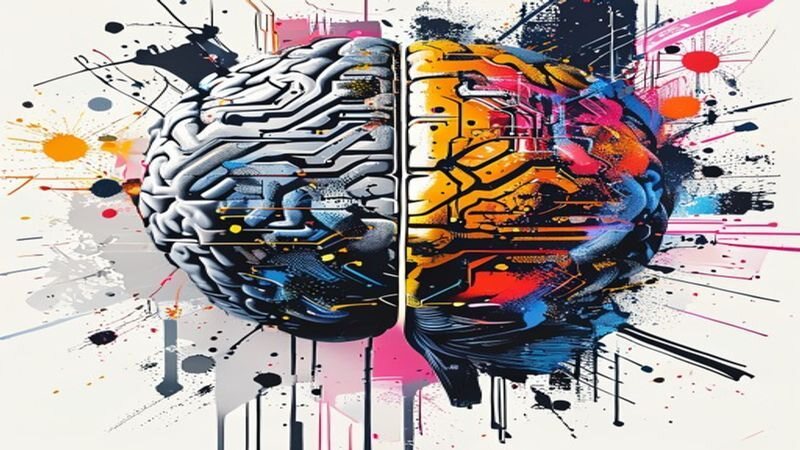
Science gently retired the left-brain, right-brain idea a while ago — real brains use both halves for nearly everything, like ambidextrous roommates sharing one small kitchen. As a metaphor, though, it refuses to die, because it points at something true: people solve problems in wildly different styles.
Some of us reach for a spreadsheet, some for a sketchbook, and some for a feeling we cannot defend but trust completely. Ahead are seven scenarios designed to reveal which style grabs the wheel when things get interesting. Consider it a portrait of your thinking, painted with cheerfully outdated anatomy.
See every possible result for this quiz and what each one means →
A careful finding that escaped the laboratory
The idea started with real and remarkable science. In the 1960s Roger Sperry and Michael Gazzaniga studied a small group of patients whose corpus callosum, the thick bundle joining the hemispheres, had been cut to control severe epilepsy. With the halves no longer exchanging notes, each could be shown information the other knew nothing about, and the two responded in strikingly different ways. Sperry shared the Nobel Prize in Physiology or Medicine in 1981 for the work.
What the popular press did next was a leap the researchers never made. Findings about surgically separated hemispheres in a handful of patients became a story about ordinary people having a dominant side, and by the 1970s that story was being sold as a personality theory.
Lateralisation is real; a dominant hemisphere is not
Brains genuinely are asymmetric. Language processing sits mainly on the left for most right-handed people, a pattern traced back to Paul Broca in 1861 and Carl Wernicke in 1874. Aspects of spatial attention and face recognition lean right. These are tendencies about particular functions, not about people.
The individual-differences version has been tested directly. Jared Nielsen and colleagues at the University of Utah analysed resting-state brain imaging from over a thousand participants aged seven to twenty-nine and published in 2013 that they found no sign of anyone having a globally stronger left or right hemisphere. Asymmetry exists network by network; it does not add up into a personal type.
So what is the quiz actually sorting?
Preferences and habits, described by you. How you approach flat-pack furniture or choose between two job offers is a real thing worth knowing about yourself, but it is a story about temperament and training rather than anatomy. The style-preference literature offers a useful caution here: Harold Pashler and colleagues reviewed the learning-styles evidence in 2008 and found that although people readily report a preferred mode, matching teaching to that preference did not reliably improve what they learned.
Hold the label loosely
Type quizzes also wobble on repetition. Take one twice a few weeks apart, with a different mood and a different week behind you, and a fair number of people land in a different category, which is a hint that the boundaries are softer than the labels suggest.
So enjoy the result as a mirror rather than a verdict. It measures nothing about your brain, ranks nothing about your intelligence, and any figure quoted in a title of this kind is a manner of speaking, not a count.