Paint Your Own Soda Can and We'll Guess Your Fizz Personality
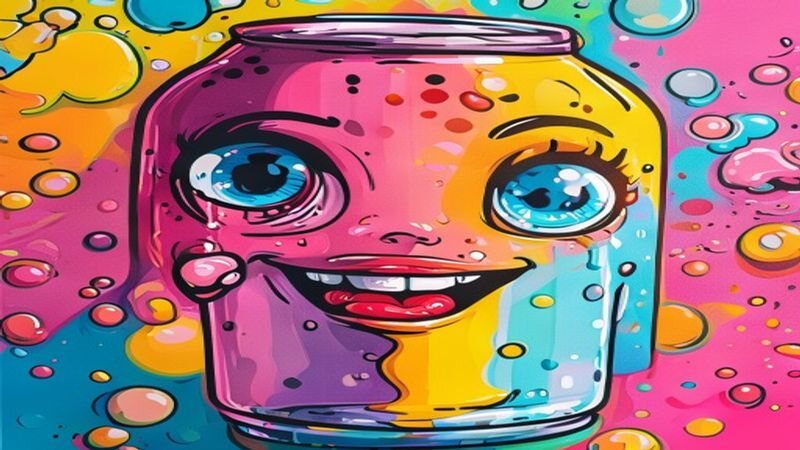
Blank aluminum is a philosophical problem: a can with no label could become anything, and what you choose to paint on it reveals more than a diary would. Color, pattern, slogan, mascot — every small decision leaks personality the way a shaken bottle leaks everywhere.
So design the thing. Seven choices stand between primer and shelf, and by the final coat this quiz will know your fizz personality with unsettling confidence. Five possible flavors of you wait at the end. One is dependable, one is chaotic, one refuses caffeine after noon, and one is dramatic. You already suspect which.
See every possible result for this quiz and what each one means →
Fizzy water began as an experiment above a brewery
Joseph Priestley lived next door to a brewery in Leeds and grew curious about the layer of gas hanging above the fermenting vats. In 1767 he worked out how to dissolve that gas, carbon dioxide, then known as fixed air, into water, and published the method a few years afterwards. The Royal Society awarded him its Copley Medal for the work. He made no money from it at all.
Johann Jacob Schweppe, a Geneva watchmaker with a serious sideline in chemistry, industrialised the process over the following decades and moved the business to London. Artificial mineral water was marketed first as a health product, on the reasoning that the celebrated spa waters were naturally sparkling.
The bite is not coming from the bubbles
Carbonated water still tastes sharp when drunk under pressure, in conditions where bubbles cannot form at all, which rules out the obvious explanation. Dissolved carbon dioxide reacts with water to produce carbonic acid, and research published in 2009 by Chandrashekar and colleagues identified an enzyme, carbonic anhydrase 4, sitting on sour-sensing cells and converting that gas into a signal the tongue can read. A trigeminal component rides alongside it, so part of the sensation is mild irritation, nearer to mustard than to sweetness.
A well-known side effect fits the account. Climbers taking acetazolamide, a drug that inhibits carbonic anhydrase, regularly report that sparkling drinks taste flat and faintly wrong.
The can took decades to become easy to open
Early beer and soft-drink cans required a separate opener. Ermal Fraze patented a pull-tab in the early 1960s that came away in the drinker's hand, which solved that problem and created another: beaches and verges strewn with small sharp pieces of aluminium. The stay-on tab that replaced it, developed by Daniel Cudzik and adopted widely from the late 1970s, is the design sitting under your thumb today.
Which leaves the label
And the label is the part the quiz above plays with. Colour, typeface, slogan and mascot make up practically the whole competitive battlefield in a category where the liquid itself varies far less from can to can than the marketing implies. Designing one for amusement reveals nothing verifiable about anybody's character, but it does place you, briefly, in the chair where those decisions genuinely get made.