What Your Pizza Order Says About You
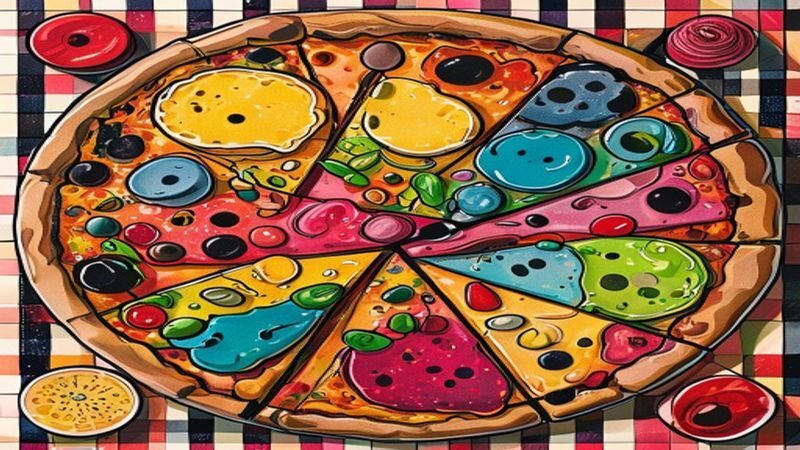
Every pizza order is a short autobiography written in cheese. The crust you defend, the topping you refuse to apologize for, the way you behave when the box opens in mixed company — all of it testifies, and none of it lies.
Seven questions follow, covering sauce philosophy, slice-sharing law, and the eternal pineapple tribunal. Respond as the person you are at the counter on an ordinary Tuesday, not the person you pretend to be around food snobs, and the verdict will name your true pizza self.
See every possible result for this quiz and what each one means →
The word is older than the tomato
Flatbread with something on top is roughly as old as bread, and nearly every cuisine has a version of it. What makes pizza specifically Neapolitan is more recent and considerably messier. The word itself appears in southern Italian documents around the end of the tenth century, several hundred years before anybody in Europe had seen a tomato.
Tomatoes came from the Americas in the sixteenth century and were treated with suspicion across much of Europe for generations. Naples warmed to them earlier than most places, and the cheap baked flatbreads sold to the city's poor picked them up at some point in the eighteenth century. The much-repeated tale that a pizzaiolo named Raffaele Esposito invented the margherita in 1889 for a visiting queen, in the red, white and green of the flag, has had serious doubt cast on its paperwork by historians. Treat it as a good story rather than a settled fact.
There is a rulebook, and it is very short
Since the 1980s an association of Neapolitan makers has published a specification for what may be sold as a true Neapolitan pizza, and the striking thing is how little it permits. Dough of flour, water, salt and yeast, and nothing further. Shaped by hand, never rolled. Baked directly on the floor of a wood-fired oven running far hotter than any domestic cooker, which is why the whole thing is done in something like sixty to ninety seconds.
That speed produces the texture people argue about: a rim that puffs and blisters into dark spots before the centre has any chance to dry out. In 2017 UNESCO added the craft of the Neapolitan pizzaiuolo to its list of intangible cultural heritage, which is a formal way of saying the technique matters at least as much as the recipe.
Every topping argument is a migration story
The pizza most of the world actually eats is the emigrant version. Italian arrivals opened bakeries in American cities in the late nineteenth century, and a Manhattan shop licensed in 1905 is usually credited as the first proper pizzeria in the United States. Coal ovens, sturdier bases and far more cheese followed from local ovens, local dairy and local appetites.
Pineapple, for the record, is Canadian. A Greek-born restaurateur in small-town Ontario said he tried it in the 1960s to see what would happen and named it after the brand on the tin. Whatever your order says about you, it mostly records where your pizza's ancestors ended up. The quiz is evidence of nothing whatsoever, but it is quick.