Give This Character a Total Makeover — We'll Reveal Your Style DNA

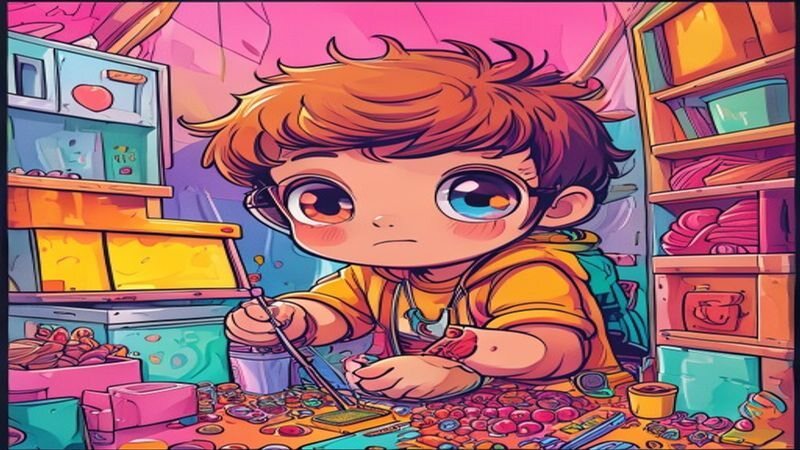
Meet your client: a perfectly average fictional person who has volunteered their entire look to science. Hair, outfit, shoes, accessories — every call is now yours, and none of your choices will be neutral. Makeovers are autobiographies wearing someone else's face.
Pick what feels right and don't second-guess it; the second guess is always somebody else's taste. Seven decisions from now, we hand back a verdict on your style DNA — the aesthetic you actually carry, not the one your closet claims. The client, being fictional, has already signed the waiver.
See every possible result for this quiz and what each one means →
A costume historian gave every garment a timetable
In the 1930s James Laver, a keeper at the Victoria and Albert Museum, set out what he took to be the life cycle of a fashion. The same dress, he suggested, reads as indecent ten years before its moment, daring one year before, smart in its own year, dowdy the year after, hideous a decade later and ridiculous after twenty. Keep waiting and it turns amusing, then quaint, then charming, and eventually, after a century or more, simply beautiful.
It is a rule of thumb rather than a measurement, and Laver was partly being mischievous. Still, it catches what the shorter folk version misses: the revival is never the original. It returns as a quotation, worn by people who were not there the first time and who mean something different by it.
Purple used to be a legal category
For centuries what you could wear was limited by statute rather than budget. Sumptuary laws across medieval and early modern Europe reserved particular furs, fabrics and colours for particular ranks, with English versions naming who might wear sable or silk of a given shade. They were widely flouted and repeatedly reissued, which tells you how well they worked. England let its versions lapse early in the seventeenth century.
Colour was expensive for physical reasons too. The deepest purple came from marine snails in absurd quantities, which is why it signalled rank. That economy collapsed in 1856 when a teenage chemistry student named William Perkin, aiming at synthetic quinine, produced a vivid mauve dye by mistake and built an industry on it. Within a few years the colour that had meant emperors was on ordinary dresses.
Trends do not only come down from above
The classic account, argued around 1900 by writers including Georg Simmel, is that fashion trickles downward. Elites adopt something to mark themselves apart, imitators follow, the elite drop it and move on. A great deal of history fits that shape.
A great deal does not. Workwear, sportswear, military kit and subcultural dress have all travelled the other way, from the street upward into expensive shops, arriving with the awkwardness of anything translated. Most current trends do both at once, spreading sideways between groups faster than anyone can trace the source.
About the verdict at the end
The five styles this quiz hands out are broad archetypes written to flatter. They will not tell you anything a mirror could not. What is true is that whichever aesthetic you land on has a paper trail: a decade it borrowed from, an economic reason its colours were once rare, and a timetable it is travelling along whether anyone notices or not.