The Broke Strawberry Seller: Can You Turn His Luck Around?
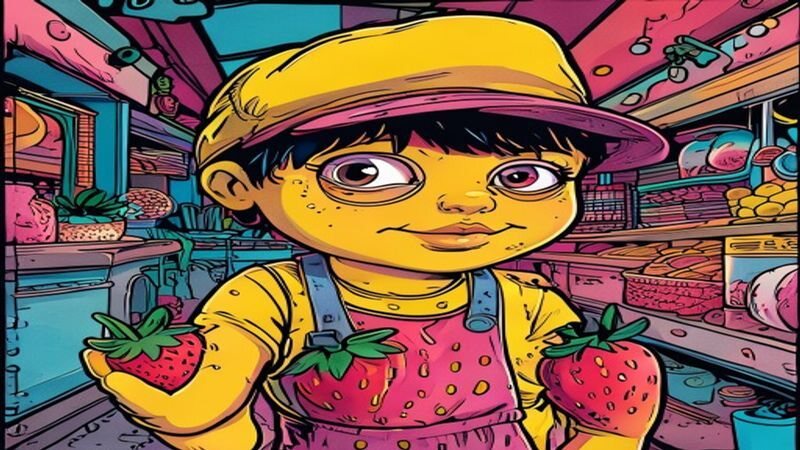
Meet a young man with a rickety stand, a crate of decent strawberries, and a run of luck so bad it is almost impressive. He is not lazy and the fruit is not the problem. He just keeps making the wrong call at the worst possible moment.
That is where you come in. Seven decisions stand between him and either a quiet bankruptcy or a small fruit empire. Read each mess, pick the move you would make, and we will tally how his week shakes out. No pressure. Only his entire livelihood is riding on a stranger with strong opinions.
See every possible result for this quiz and what each one means →
The modern strawberry began with a military spy
Europeans ate wild woodland strawberries for centuries: tiny, intensely fragrant and close to useless commercially. The large fruit sold today belongs to a species that did not exist before the eighteenth century, a hybrid of one strawberry from the Pacific coast of South America and another from eastern North America, and it appeared in European gardens largely by accident.
The Chilean half arrived courtesy of Amedee-Francois Frezier, a French military engineer sent south in 1712 to map Spanish fortifications. He noticed farmers growing strawberries far bigger than anything at home and carried plants back across a long voyage, of which only a handful lived. They were all female and sulked without a pollen partner until planted near North American stock, at which point the cross produced something better than either parent. The hybrid was named for its faintly pineapple-like scent.
Not a berry, and those are not seeds
Botanically a strawberry is not a berry. The red flesh is swollen receptacle tissue, the tip of the flower stalk, rather than an ovary wall, which makes it an accessory fruit. The real fruits are the pale specks studded over the outside, each an achene containing one seed.
They are also in charge. Classic experiments showed that stripping the achenes off a young strawberry stops the flesh swelling altogether, and that painting the stripped surface with plant hormone makes it swell anyway. The red part grows because the seeds instruct it to.
A punnet never improves on the walk home
Strawberries are non-climacteric, meaning they stop developing the moment they are picked. Bananas and tomatoes carry on converting starch and softening after harvest; a strawberry does not. Whatever sugar, colour and scent it has when it leaves the plant is all it will ever have. After that it only loses water, goes soft and grows mould.
This is why the fruit must be picked ripe rather than firm, why it travels badly, and why a stall beside the field it came from can honestly offer something a long supply chain struggles to match.
Every one of them was picked by a person
Commercial strawberries are still harvested by hand. The fruit bruises under machinery, ripens unevenly along a row and has to be judged individually, so pickers work the beds selecting by eye and laying fruit straight into the punnet it will be sold in. Plants are usually propagated from runners, so a field is largely clones, and in many systems the planting is replaced every year.
None of which the quiz below simulates. It is a light run of decisions at a struggling fruit stand, and the only realistic element is that the stock spoils quickly.