What Mythical Creature Is Your Alter Ego?
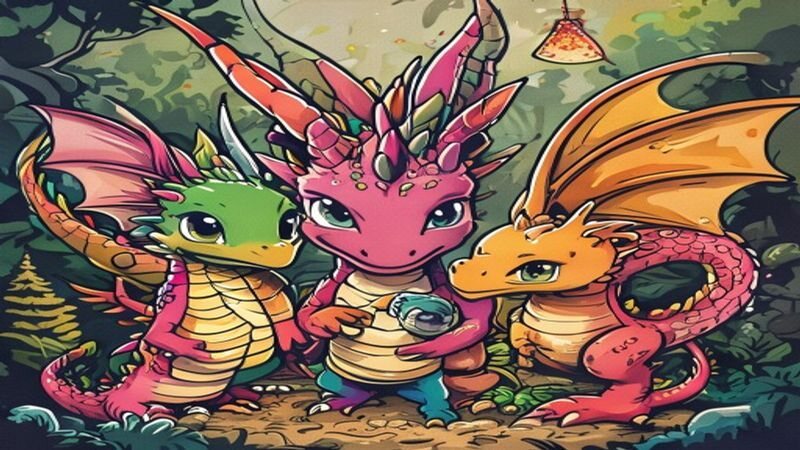
Folklore is really just field biology with worse record-keeping. Old cultures watched people carefully, noticed the same temperaments recurring, and filed them under scales, feathers, tentacles, moss, or mischief. The taxonomy holds up shockingly well, and you are in it somewhere.
Think of the next seven prompts as habitat observations. Where do you nest, what do you guard, and what exactly happens when someone crosses you? Answer on instinct — creatures do not deliberate — and this quiz will match you with the legend your ancestors would have painted on a cave wall.
See every possible result for this quiz and what each one means →
The book behind a thousand monsters
Most medieval European monster lore descends from one anonymous text, the Physiologus, compiled in Greek in Alexandria at some point in the early centuries of the common era. It paired creatures, real and invented alike, with a short moral lesson: the pelican, the panther, the phoenix, each carrying a meaning. Translated and expanded over centuries, it grew into the medieval bestiary, and bestiaries were copied, illustrated and cheerfully embellished for something like a thousand years.
They were never field guides. A bestiary is closer to an anthology of meanings, which is exactly why its creatures map so neatly onto human temperaments.
A unicorn assembled out of a translation
The unicorn reached Europe partly through a translation problem. The Hebrew re'em, some species of wild ox, was rendered in the Greek Septuagint as monokeros, one-horn, and the Latin Bible followed suit. A single-horned beast was now attested by scripture and therefore needed a body, so illustrators supplied one.
The horns supplied themselves. Long spiral tusks arrived on European markets from the Arctic and sold at ruinous prices as unicorn horn with medicinal powers. They came from narwhals.
The sea monster with a plausible original
The kraken enters the record through Scandinavian accounts of an enormous many-armed animal off the Norwegian coast, and here the sceptical explanation is unusually strong. Giant squid are entirely real, reach lengths that startle the people who handle the specimens, and occasionally wash ashore. One dead animal on a beach is quite enough to seed a legend.
Fossil bones have been proposed as the origin of dragon and griffin stories too, most prominently by the folklorist Adrienne Mayor. That remains an appealing argument rather than a settled finding, and it is best quoted as a hypothesis.
Sorting people by beast
Which is roughly what happens above, with rather less scholarship: five creatures, seven prompts, no taxonomy underneath any of it. Still, the impulse is genuinely ancient. People have always described each other in animals, and the bestiary tradition simply wrote the habit down in gold leaf. The old compilers would probably have approved of the method, if not of the accuracy.