Free Coins Just Dropped — Your First Move Exposes Your Player Type
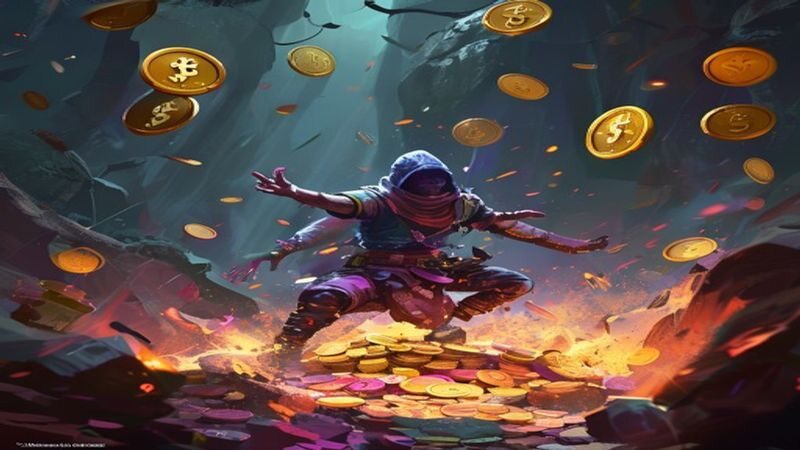
Fifty thousand coins just landed in your account and the commentary team is losing it, because nothing exposes a player's soul faster than free currency. Some of you are already sprinting to the shop. Some of you will still be sitting on this pile in three years, guarding it like treasure with a heartbeat.
Seven windfall scenarios follow. React honestly at each one — the replay booth sees everything — and at the buzzer you will get your official player profile, complete with a share line for the guild chat.
See every possible result for this quiz and what each one means →
How the industry learned to sell things that do not exist
The pivotal moment survives mostly as a punchline. In 2006 a small piece of decorative armour for a horse went on sale as paid downloadable content, cost about the price of a coffee, changed nothing whatsoever about play, and was mocked without mercy. It also sold, and the lesson stuck: people will pay for how something looks, quite separately from what it does.
The free-to-play model followed from there. Give the game away, keep the shop open, and rely on a pattern reported again and again in industry analysis, in which a small minority of spenders supplies most of the revenue while the large majority pays nothing at all and keeps the lobbies full.
Capsules, published odds, and the regulators who noticed
The random-draw shop takes its nickname from the capsule toy machines long popular in Japan, and its regulatory history is livelier than most players realise. In 2012 Japan's consumer protection authority took against one especially aggressive variant, in which a player had to complete a set of common items before a rare prize unlocked, judging it to fall foul of rules on prize offers. Publishers withdrew it.
China introduced requirements from 2017 obliging operators to publish the probability of what a draw can produce, which is why odds tables are now such a familiar sight. In 2018 Belgium's gambling regulator concluded that certain paid random-reward features met the national definition of gambling, and several publishers removed them from that market rather than test the point.
Unpredictable rewards, and the limits of a coin drop
The psychology underneath is not mysterious. Work on operant conditioning, most associated with B. F. Skinner, established that a reward arriving on an unpredictable schedule sustains a behaviour far more stubbornly than one arriving reliably. A shop that pays out sometimes holds attention better than a shop that pays out always, and every pity timer or guarantee after a fixed number of pulls is a designer negotiating with that fact.
Knowing all this is no protection against enjoying the pull animation, and a run of hypothetical scenarios cannot really predict what you would do with real currency. The profile is a talking point. Put it in the guild chat and let somebody dispute it.