Which Console Era Is Your Gaming Spirit?
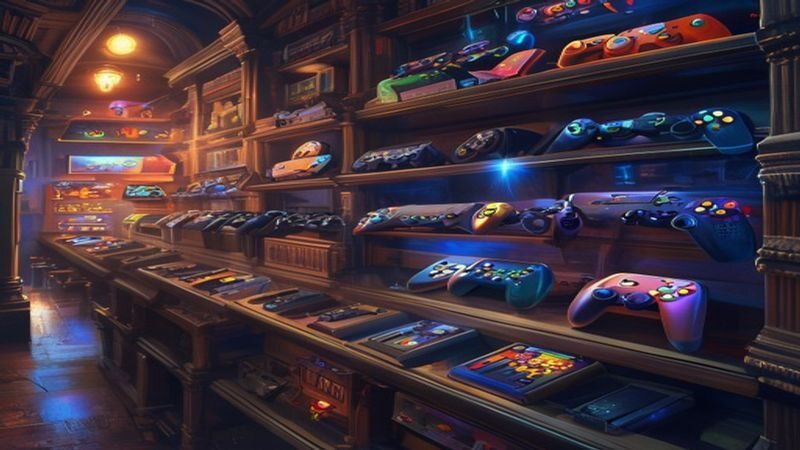
Deep in your thumbs lives an era you never consciously chose. Maybe your spirit runs on tokens and raw reflex. Maybe it renders in proud, chunky triangles with mitten hands. Maybe it only truly boots up when three friends are crammed onto one couch arguing over the good controller.
Seven questions with suspiciously specific answers will sort you into the gaming generation you actually belong to — and fair warning, it may not match the one you grew up with. The heart wants what it wants, and sometimes what it wants is a password screen.
See every possible result for this quiz and what each one means →
Cabinets inherited their manners from the amusement hall
Coin-operated entertainment is far older than the video game. Pinball tables, shooting galleries and electro-mechanical driving machines had filled amusement arcades for decades, and the earliest video cabinets inherited their furniture, locations and audience. Space Invaders arrived from Taito in 1978 and Pac-Man from Namco in 1980, the latter from designer Toru Iwatani, who has described wanting to reach people beyond the young men then crowding around the shooters.
The strangest surviving relic of that world is the attract mode, the loop of demonstration play that runs to an empty room. It is an advertisement performing itself, and consoles kept it long after there was anyone left to walk past.
The 1985 seal, and what it was answering
The North American home market fell apart in the mid-1980s, and the wreckage is still visible in one famous artefact: the pile of unsold Atari stock buried in a New Mexico landfill, a story treated as folklore until an excavation in 2014 pulled the cartridges back out of the ground.
Nintendo's response, as its console rolled out across the region from 1985, was strict control over who was allowed to publish for the machine, backed by a quality seal stamped on every box. Whatever you make of gatekeeping, it gave nervous retailers a reason to stock the shelf again, and the licensing model it established shaped console publishing for decades.
Batteries, discs and the first modems
You can chart the generations by how games learned to remember you. Long passwords scrawled on paper were the cheap solution; the alternative was a battery sitting inside the cartridge, which is what let the first Legend of Zelda keep your quest waiting. The move to CD-ROM in the mid-1990s traded instant loading for enormous storage, and studios promptly filled it with voice acting, orchestral music and video.
Then came the wire. Sega's Dreamcast shipped with a modem built in at the end of that decade, and Xbox Live from 2002 turned matchmaking, friends lists and voice chat into assumed features of owning a console rather than a hobbyist project.
Nostalgia does not run in chronological order
Plenty of people raised on online shooters feel most at home in a pixel side-scroller they met second-hand, and plenty who queued in real arcades now want a game that saves anywhere. No set of questions can locate which generation your instincts belong to. It can hand you a label worth bickering over with whoever is nearest.